Human
Outcome, priorities, policy and judgement
Nexus is an AI Command Bridge. You describe what should be true when the work is finished. Nexus understands the project, organises the connected work, coordinates the right capabilities and AI models, verifies the result and brings you the decisions that still require human judgement.
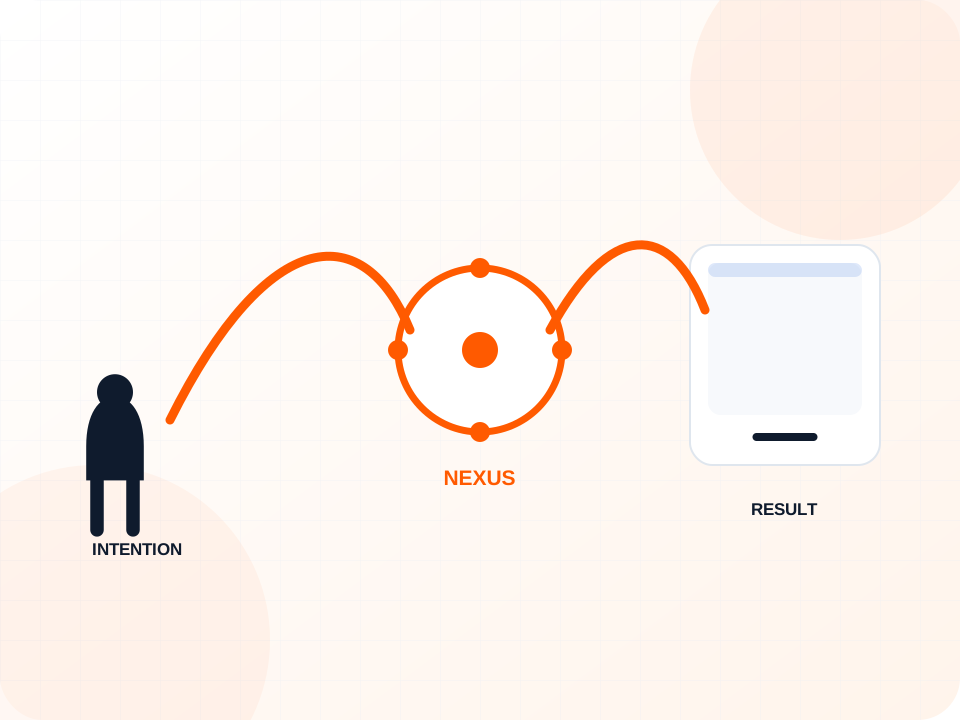
People should not have to translate every business objective into menus, files, forms, application procedures and hand-offs. Nexus lets the objective remain the starting point.
Outcome, priorities, policy and judgement

Understand, organise, control, work and verify
Coordinated action and measurable result
Ordinary AI can explain the procedure. Nexus carries the objective through the authorised systems, keeps the work inspectable and returns a checked outcome.
You receive an answer, a plan or code. You still locate the systems, repeat the operations, resolve conflicts and check the result.
One objective becomes an organised mission with project memory, connected workstreams, authority checkpoints, independent review and evidence.
Nexus combines the parts that are usually fragmented across chats, applications, files, people and follow-up tasks.
Translates human goals into organised work across authorised digital capabilities.
Keeps research, changes, checking, approvals and follow-up inside one continuing mission.
Retains useful terminology, rules, resources, history and previous decisions.
Adds specialist systems and abilities without changing the way the user gives an objective.
Uses different providers and models for planning, research, building, specialist work, review and oversight inside one mission.
Separates what Nexus can do from what it is allowed to do in this project and mission.
Nexus separates the mission from the individual AI model. A company can use different providers, assign a stronger model to demanding work, use specialist intelligence where it adds value and let an independent model review the result. The project context, permissions, capabilities and mission history remain stable around them.
Keeps the objective, constraints and mission state coherent.
Finds and organises information required to continue the work.
Creates or changes the requested output.
Checks whether the result matches the objective and project rules.
Adds domain-specific judgement where a general worker is weaker.
Examines sensitive, unusual and authority-related actions independently.
Nexus can route each role to the AI system best suited to the objective, domain and level of reasoning required.
The worker and reviewer can use different models so important work is checked from an independent reasoning path.
Smarter AI can produce better interpretation, plans, implementation, decisions and verification without changing how the user works with Nexus.
Upgrading the intelligence does not discard the company’s rules, history, permissions, connected systems or accepted decisions.
A website update, supplier import, customer resolution or cross-platform campaign can all be followed through objective, authority, work, decisions and result.
What should be true when the job is finished?
Which project, systems, records and people belong to the mission?
What must remain unchanged? Which deadlines, rules and budgets matter?
What may Nexus inspect, prepare, execute, publish or decide?
Which workstreams, dependencies and review roles are required?
What is complete, active, blocked or waiting for a person?
Which cases fall outside the normal rules?
How is the actual result checked against the objective?
What changed, what is complete and what still needs attention?
Which evidence and decisions become project memory?
Clear states distinguish interpretation, preparation, execution, checking, decisions and completion.
Clarifying the objective, success test and boundaries.
Inspecting project information and identifying affected work.
Organising workstreams, dependencies, authority and review.
Creating proposed changes and previews before sensitive action.
Performing the actions authorised for this mission.
Comparing the actual result with the objective and project rules.
Presenting one focused approval, preference or ambiguity.
Closing the mission with a verified result and attached evidence.
Recording the completed portion and the exact unresolved boundary.
Protecting the project when a conflict, risk or authority boundary is reached.
These principles keep the product useful, controlled and understandable across completely different forms of digital work.
The user states the desired result; Nexus carries the burden of organising the mission.
Knowing how to act never silently grants permission to act.
People are called for policy, ambiguity and responsibility—not routine volume.
Objective, scope, progress, decisions and evidence stay visible.
Independent checking is part of the mission, not an optional final comment.
Projects preserve useful working knowledge across missions.
Facts, assumptions, proposals and completed actions remain distinct.
New systems become controlled abilities inside the same mission model.
Nexus can use the best available intelligence for planning, specialist work and independent review.
Nexus coordinates the tools a company already relies on.
The mission closes only after the actual result is checked and recorded.
Users move between the objective, project context, connected work, authority, review and evidence without losing the mission narrative.
Objectives, stage, progress, decisions, evidence and verified result.
Context, rules, resources, previous decisions and open work.
Files, websites, remote environments, documents and connected business systems.
Authority, permissions, services, traces and operational policy.
Independent checks, exceptions, before-and-after state and acceptance.
The specialist abilities available to each project and mission.
Start with the result you want. Nexus turns it into one controlled mission across the project and systems involved.